The NSVRC collects information and resources to assist those working to prevent sexual violence and to improve resources, outreach and response strategies. This page lists resources on this website that have been developed by NSVRC staff.
In the first part of a two-part episode, Mo talks with DeAnn Alcantara Thompson and Sid Jordan about Mapping Prevention, a community participatory action research project that helped shape the direction of prevention funding in King County, WA. Learn more about Mapping Prevention Dakota Camacho: https://www.dakotacamacho.com/ Darin Dorsey: https://www.rootingmovements.org/about-us The Coalition to End Gender-Based Violence: […]
This brief provides information on how Rape Prevention and Education funded programs connect the dots between health equity and anti-oppression work.
This brief provides information on the impact of COVID-19 on Rape Prevention and Education programs and how they adapted during the first year of the pandemic.
This publication includes a description of the background for NSVRC National Strengths and Needs Assessments and the methodology for the 2021 survey administered to Rape Prevention and Education funded programs and agencies.
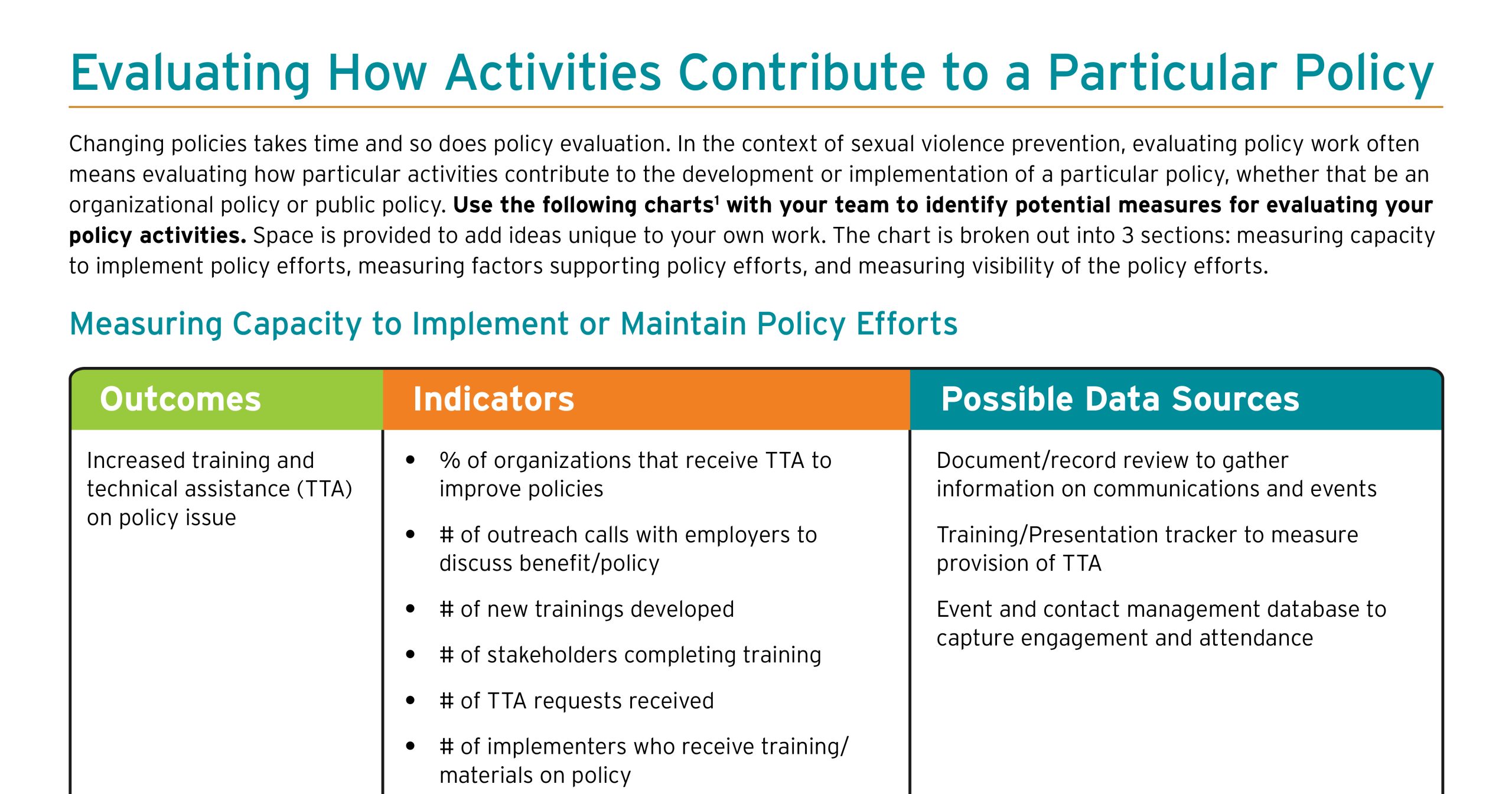
This worksheet, which is a part of the NSVRC Evaluation Toolkit, provides evaluation planners with ideas for evaluating policy activities.
Poet Kelly Mays (Native Child) shares her poem inspired by her work on the MPHI Community Sexual Violence Prevention (CSVPA) Advisory Committee. You can hear more of Kelly’s work and connect with those that are honoring her legacy at the link below. Facebook: https://www.facebook.com/nativechild.mays/
This episode is a conversation with Kelly Mays and Sara McGirr about the process used and findings from an equity focused sexual assault community assessment process in Michigan. SHOW NOTES: MPHI’s Office of Gender, Sexuality, and Violence website: https://mphi.org/svp/ MPHI Community Assessment Reports Executive Summary: Findings from Michigan’s Community Sexual Violence Assessment CSVPA […]
In this webinar, we share our new organizational name and refreshed brand. {“preview_thumbnail”:”/sites/default/files/styles/video_embed_wysiwyg_preview/public/video_thumbnails/PcmnP8ZrtFY.jpg?itok=vUa5Nb4q”,”video_url”:”https://www.youtube.com/watch?v=PcmnP8ZrtFY”,”settings”:{“responsive”:1,”width”:”854″,”height”:”480″,”autoplay”:1},”settings_summary”:[“Embedded Video (Responsive, autoplaying).”]} Respect Together, our new name, was identified and embraced following an extensive rebranding process that engaged the voices and insights of many of our state and national partners. The name, paired with our new tagline “United to end sexual […]
On this podcast, NSVRC Evaluation Coordinator, Sally Laskey talks with researchers Dr. Nicole Allen and Aggie Rieger about how to better support those working to prevent sexual violence. Participants Sally J. Laskey, NSVRC evaluation coordinator Nicole Allen, Professor, Vanderbilt University Aggie Rieger, PhD. Student, University of Illinois Article discussed in the episode Contradictions […]
This webinar from the National Sexual Violence Resource Center (NSVRC) and Just Detention International (JDI) suggests how you can communicate about sexual violence as something that men experience, and about what services are available at your sexual program for men who are survivors.