

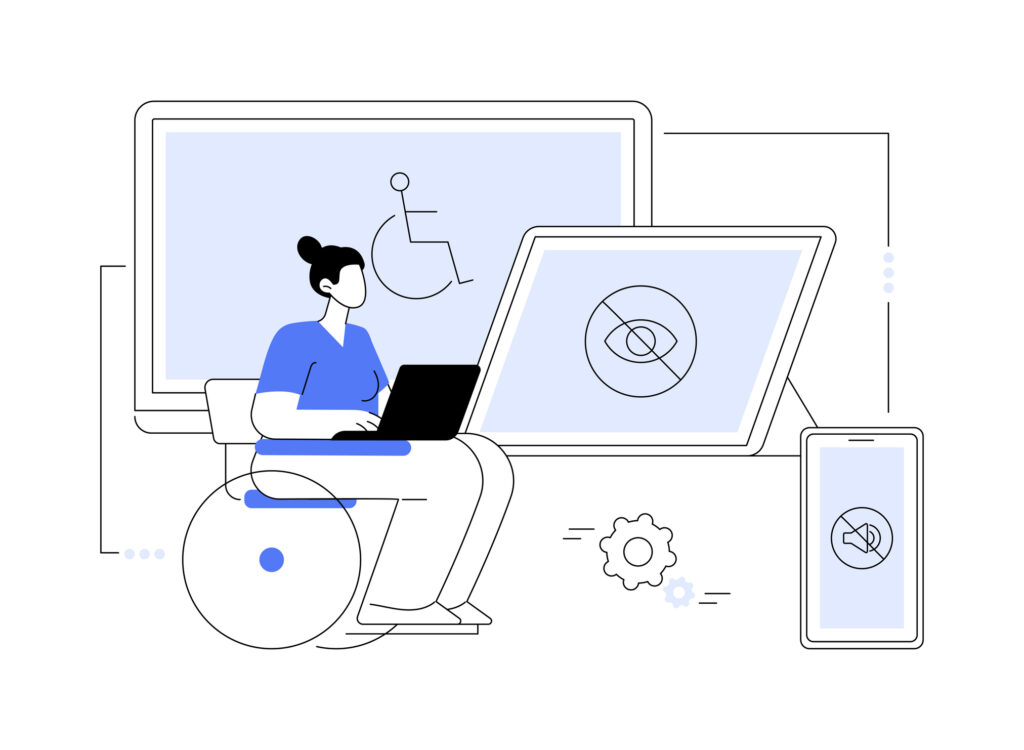
For those in public health, working towards health equity (equal access to healthcare and good health outcomes) means starting with big, bold questions:
- Why are some groups experiencing poorer health outcomes than others?
- What forms of oppression might be embedded in our structures and systems?
- What tangible actions can we take to address these public health gaps?
Much of the discussions around making a health-equitable society revolve around our tangible reality. Lowering the cost of prescription drugs, providing food to low-income communities, and transportation to medical care are all physical, tangible solutions to very serious health divides. However, sometimes we need to examine what cannot be touched but what touches our lives in different ways: the digital space.
The increased access to the internet and smart tech has been a gamechanger in a lot of very positive ways. Patients can get medical consultations or therapy appointments from their homes. Digital tools offer more paths for patients to connect with their providers. Apps can provide medication reminders, access to health information and medical records, and exercise tracking. For survivors, having chat support instead of phone calls, using the “Take It Down” tool to help track and remove explicit images from the internet, and easily timestamping threatening interactions from perpetrators are all elements of smart tech that empower and protect them. These are all huge wins, but this does not mean these sites, tools, and platforms are meeting the needs of all their users. This is where we need to take into consideration digital health equity.
The Association of Health Care Journalists says that, “With digital health equity, everyone, regardless of social, economic, demographic or geographic differences, should have equal access to digital health resources and should achieve equal health outcomes through the use of these tools.” Like most structures and systems in the United States, digital spaces do not factor marginalized groups into their design. Barriers to this form of equity include living in a rural community with poor internet access, having low technical literacy, and language inaccessibility. For users with disabilities, the digital health space can be even more complicated.
AudioEye’s 2025 Digital Accessibility Index found that, despite the healthcare industry being more accessible than other industries, “The average healthcare page still had 272 accessibility issues.” These were some of the issues they uncovered:
- Healthcare sites had an average of 17.2 inaccessible images per page — making it difficult for patients with disabilities to obtain essential information about their care, such as diagrams explaining medical procedures or facility maps.
- The average healthcare page had 69.1 unique violations of WCAG’s minimum color contrast requirements. For patients with visual disabilities, including older adults experiencing vision loss, poor contrast can make it difficult to read test results, medication instructions, or emergency contact details.
- Healthcare websites had an average of 6.1 keyboard accessibility violations per page — making it harder for patients with visual and motor disabilities to navigate patient portals, access health records, or schedule appointments.
- The average healthcare page had 5.4 inaccessible links, which can make it harder for people with disabilities to find essential resources like appointment scheduling, patient portals, or emergency contact details.
- Healthcare websites had 4.0 inaccessible forms, labels, and buttons per page — making it difficult for patients to schedule appointments or fill out medical paperwork independently. (AudioEye)
These findings are a representation of a larger problem: people with disabilities face an increased risk for poor health outcomes because of systems that don’t consider their needs. People with disabilities are also more likely to experience sexual violence, and digital health inequity worsens this problem. Lack of staff training and inconsistent funding and technology for 9-1-1 and survivor hotlines makes it harder for survivors with disabilities, particularly Deaf survivors, to get emergency help. Blind or visually impaired users may be endangered if a site detailing sexual violence support services does not allow navigation without auto-reading aloud the content. Reporting forms on web pages may be inaccessible for people with disabilities, further endangering survivors who would like to come forward. Even the inaccessibility of educational materials can have dire consequences, because it can potentially prevent survivors from making community with each other or identifying dangerous situations/dynamics.
When we make it harder for survivors to reach us, we inadvertently contribute to the continued cycle of sexual abuse. This is why we must continually engage in the digital health equity conversation.
All great solutions start with good questions. Some questions we might all consider going forward are:
- What foundational principles can we lay out to commit to digital health equity?
- How often are we inviting perspectives from the disability community as tech rapidly evolves?
- What world do we want to see for every user with a disability who wants to seek services?
Mantis & Co. Founder Anna Thielke, who is neurodivergent and legally blind, created her startup to use technology to better disability healthcare outcomes. She remarked the following:
Accessibility isn’t just a checkbox. It directly impacts health outcomes, says Thielke. We need to create digital solutions that are as diverse and multi-faceted as the people using them. There’s a tremendous opportunity to change how we interact with technology, particularly for communities that have been historically underserved (Mantis & Co, 2024).
This is the bold, forward-thinking mindset that comes with involving community members in solution creation. This is how we take real steps towards a future that does right by survivors of every ability and from all backgrounds. This is something service providers would do well to remember, because we will never see true equity without collaboration.
Resource for Survivors with Disabilities: